
Hearing Aids in Naples, FL
How Do I Know If I Need a Hearing Aid?
Hearing aids can help if you're having trouble hearing conversations clearly, especially in noisy environments, or if you find yourself frequently asking people to repeat themselves. Other common signs include turning up the TV or phone volume louder than those around you prefer, feeling like people are mumbling, or avoiding social situations because following conversations feels exhausting. These experiences are common, and they don't mean anything is wrong with you, just that your hearing may benefit from some support. If any of this sounds familiar, a hearing evaluation is the best way to find out whether a hearing aid could help.
Types of Hearing Aids
Hearing aids come in several styles, mainly differing in size and where they sit in or around the ear. Some fit fully inside the ear canal, others sit in the outer ear, and some sit behind the ear with a small connection to the ear canal. Each style has tradeoffs in visibility, comfort, and ease of use, and your audiologist can help you find the right fit for your hearing loss and lifestyle.
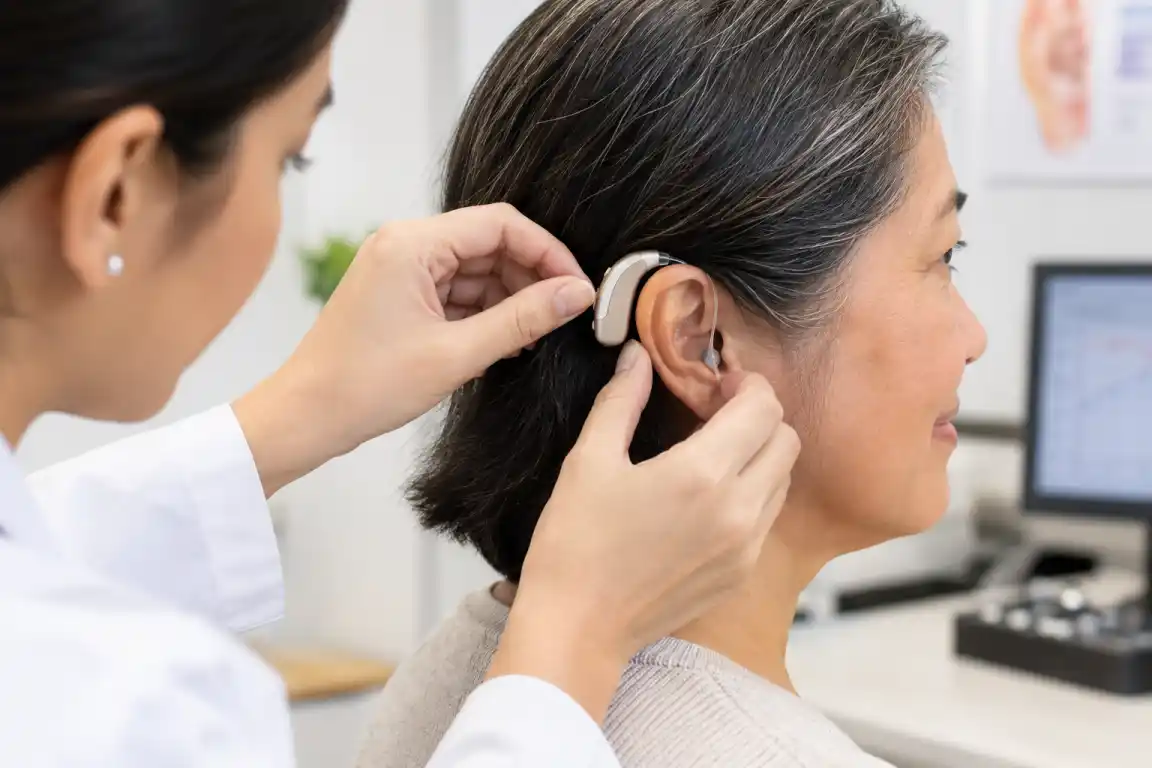
- Behind-the-ear (BTE): Sits behind the ear with a small tube connecting to an earpiece in the canal. Often a good fit for more significant hearing loss and tends to be easier to handle and adjust.
- In-the-ear (ITE): Custom-made to fit in the outer ear. More visible than smaller styles, but often easier to insert and adjust for people with dexterity concerns.
- In-the-canal (ITC) and completely-in-canal (CIC): Smaller, custom-fitted styles that sit partly or fully inside the ear canal. Less visible, but can be harder to handle for some patients.
- Receiver-in-canal (RIC): Similar to BTE, but with the speaker placed in the ear canal itself rather than behind the ear. Often smaller and more discreet than traditional BTE styles.
There's no single “best” style, it depends on your specific hearing needs and daily life. A hearing aid evaluation is the best way to find the right fit.
Getting Fitted for a Hearing Aid
Collier Otolaryngology is led by board-certified physicians Dr. Thomas Magardino and Dr. Todd Morehouse. Our audiology team works alongside them to provide hearing evaluations and hearing aid fittings tailored to your needs.
Getting fitted for a hearing aid starts with a hearing evaluation to understand the type and degree of hearing loss you're experiencing. From there, your audiologist can recommend styles that fit your needs, take measurements or impressions if a custom fit is required, and program the device to match your specific hearing profile.
Fitting isn't a one-time event. Follow-up adjustments are a normal part of the process as you get used to wearing a hearing aid and your audiologist fine-tunes the settings based on your feedback.
This process is part of our audiology services at Collier Otolaryngology, where hearing evaluations and hearing aid fittings are handled by the same team.
Caring for Your Hearing Aid
A little regular care goes a long way toward keeping your hearing aid working well. General tips include:
- Keep your hearing aid dry, and remove it before showering, swimming, or in heavy rain.
- Clean it regularly with a soft, dry cloth to remove earwax and debris.
- Store it in a safe, dry place when not in use, and keep it away from extreme heat.
- Replace or charge batteries as needed, depending on your device.
- Schedule regular check-ins with your audiologist for cleaning, adjustments, and to catch any issues early.
With proper care, most hearing aids last several years before needing to be replaced.
Find the Right Hearing Aid for You
If you think a hearing aid could help, the next step is a hearing evaluation with one of our audiologists in Naples. We'll help you understand your options and find a solution that fits your hearing needs and your life.
Schedule a Hearing Aid EvaluationFrequently Asked Questions
How much do hearing aids cost?
The cost of hearing aids varies widely depending on the style, technology level, and features you choose. During your hearing evaluation, your audiologist can walk you through the available options and help you understand what fits your budget and hearing needs.
Will insurance cover my hearing aids?
Coverage varies by insurance plan, and not all plans include hearing aids. Our office can help you understand your specific coverage and discuss options if your plan doesn't include hearing aid benefits.
How long does it take to get used to a hearing aid?
Most people need a few weeks to adjust to wearing a hearing aid and to how sounds are processed differently. Your audiologist will schedule follow-up visits during this period to fine-tune the fit and settings based on your experience.